
.svg)


.svg)

.svg)

.svg)


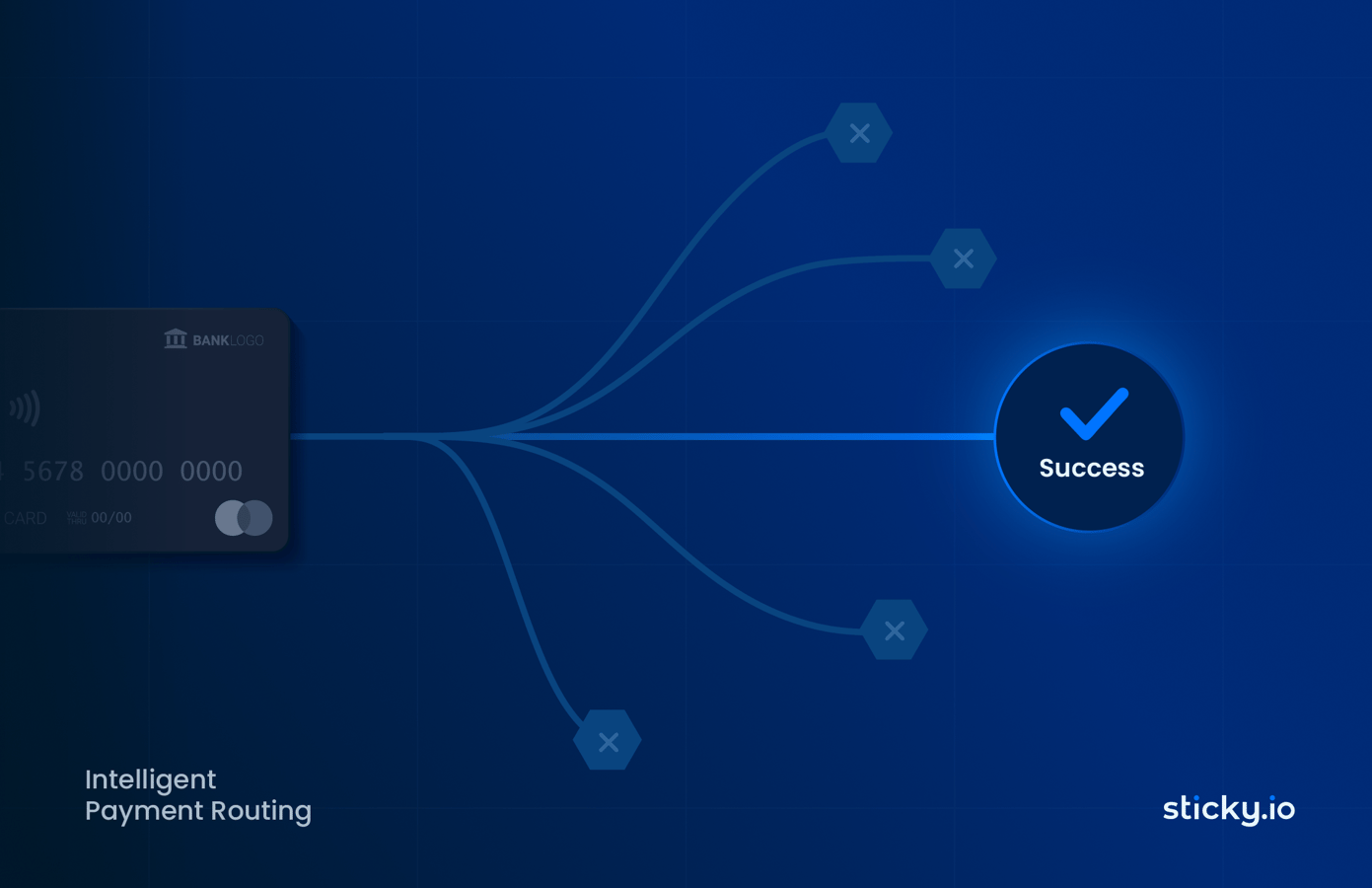
Nearly seven in 10 ecommerce merchants prefer to use multiple payment processors — and for good reason.
The path a payment takes can impact approval rates, processing costs, checkout performance, and customer retention. Payment routing helps merchants optimize those outcomes automatically.
If you’re among the 30% of merchants who use only one, you may be missing out. And even if you’re in the 70%, it’s worth considering whether your setup leverages those partnerships to their full potential.
Payment routing, a practice that directs transactions to a specific processor, helps merchants process ecommerce subscription payments more efficiently, especially when connected to a subscription commerce platform or payment optimization system. It works by intelligently directing transactions through the best available payment path. (If you’re unfamiliar with the concept, our guide to transaction routing breaks down how it works.)
This method optimizes transaction paths by playing off the strengths of each payment processor you work with.
Payment routing isn’t a new practice, but recent advancements in machine learning have created a new (and better) option for merchants: intelligent payment routing. This solution uses big data to find the best path for each transaction. That means these tools are looking for ways to increase your transaction approval rate and save you money, all while offering better security and more options for your customers. If you haven’t considered whether smart payment routing could help your business, it’s time to learn more.
A Guide to How Payment Routing Works
Ecommerce merchants have embraced payment routing to improve transaction speed and approval rates while reducing the fees they pay. Payment gateways and payment orchestration platforms (POPs) that are linked to multiple acquiring banks may provide this service for sellers.
“Routing” means sending payments to a specific acquiring bank in search of a particular outcome, often facilitated by a routing engine. Each transaction is analyzed on factors like:
- Customer location
- Transaction currency
- Payment amount
- Card issuer/brand
- Card authorization method
- Payment date and time
The payment gateway then uses these data points to determine which path will result in the quickest (and cheapest) resolution of the payment.
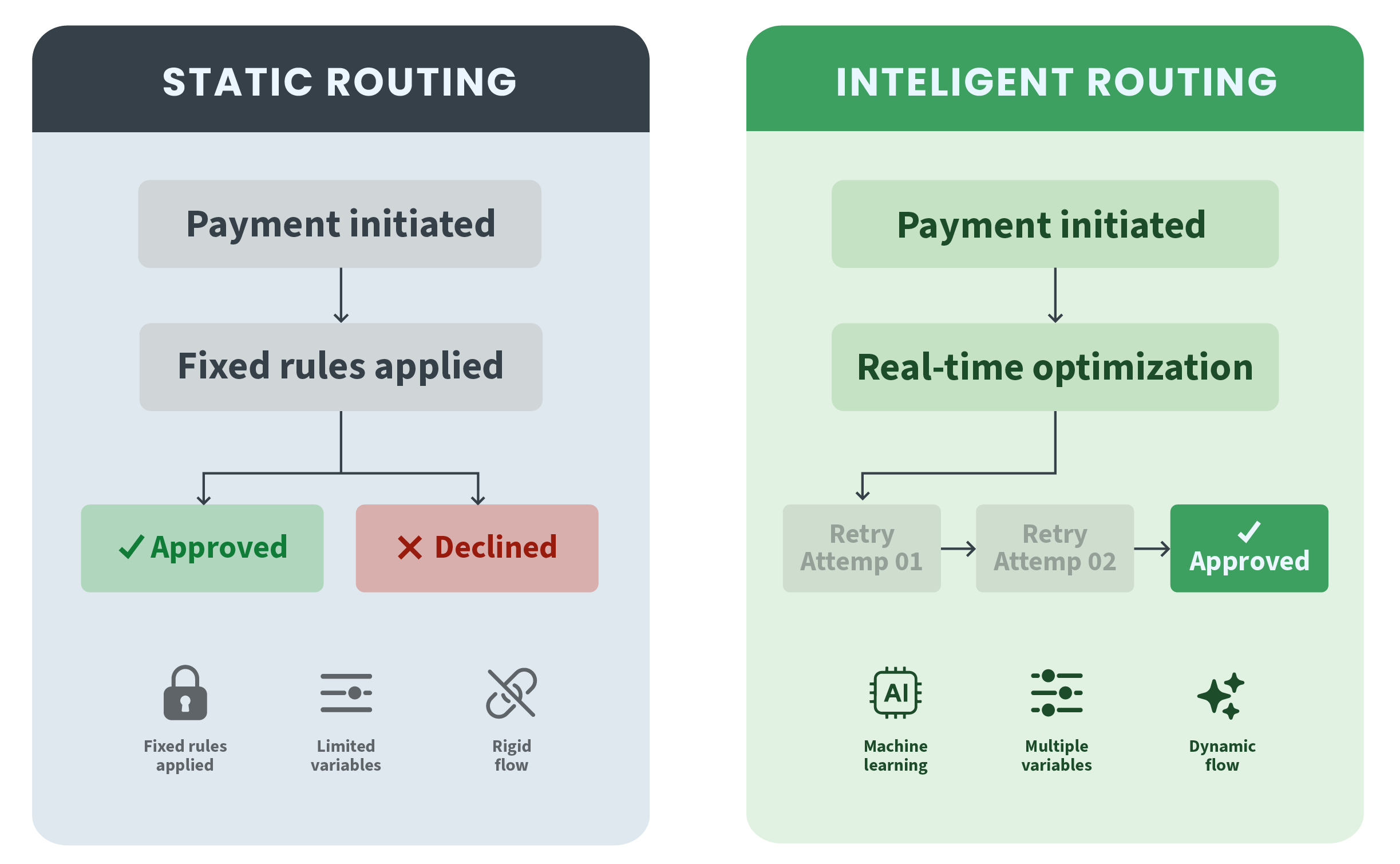
There are two main ways to route transactions based on this data. One is with a static, or rules-based, routing setup. The other is through an intelligent or smart payment routing engine.
Static Payment Routing
In this setup, sellers manually create routing rules for payment processing, and the gateway routes payments accordingly.
For example, all transactions in British pounds go through Bank A, while transactions in US dollars go through Bank B if they’re Visa or American Express payments or Bank C if they’re charged to Discover or MasterCard. Static routing can improve costs and approval rates compared to sending every transaction through the same acquiring bank. But maintaining manual rules requires ongoing configuration and limits flexibility.
Intelligent Payment Routing
Intelligent payment routing systems, on the other hand, use machine learning and payment analytics to determine the optimal routing logic for each payment. This decision is based not only on the transaction details but also on past outcomes of similar payments. Because these determinations are made in real-time and the system learns from every transaction, smart routing tends to return better results than static payment routing.
Smart payment routing helps by considering all available transaction data. Say you work with Bank A, which is more likely to approve Visa transactions before 10 a.m. Eastern time; after that, you send those payments through Bank B. However, Bank A remains the best choice for MasterCard transactions until 2 p.m. Eastern time. In a rules-based routing system, you would have to choose one of those variables — card type or time — to determine where the payment should be sent. A dynamic payment routing system can understand how variables interact and provide a more accurate analysis of which route is best for a payment.
Both types of payment routing help ecommerce merchants serve customers better by sending transactions to the banks most likely to approve them quickly. Intelligent payment routing typically provides more optimization with less effort on the seller’s part.
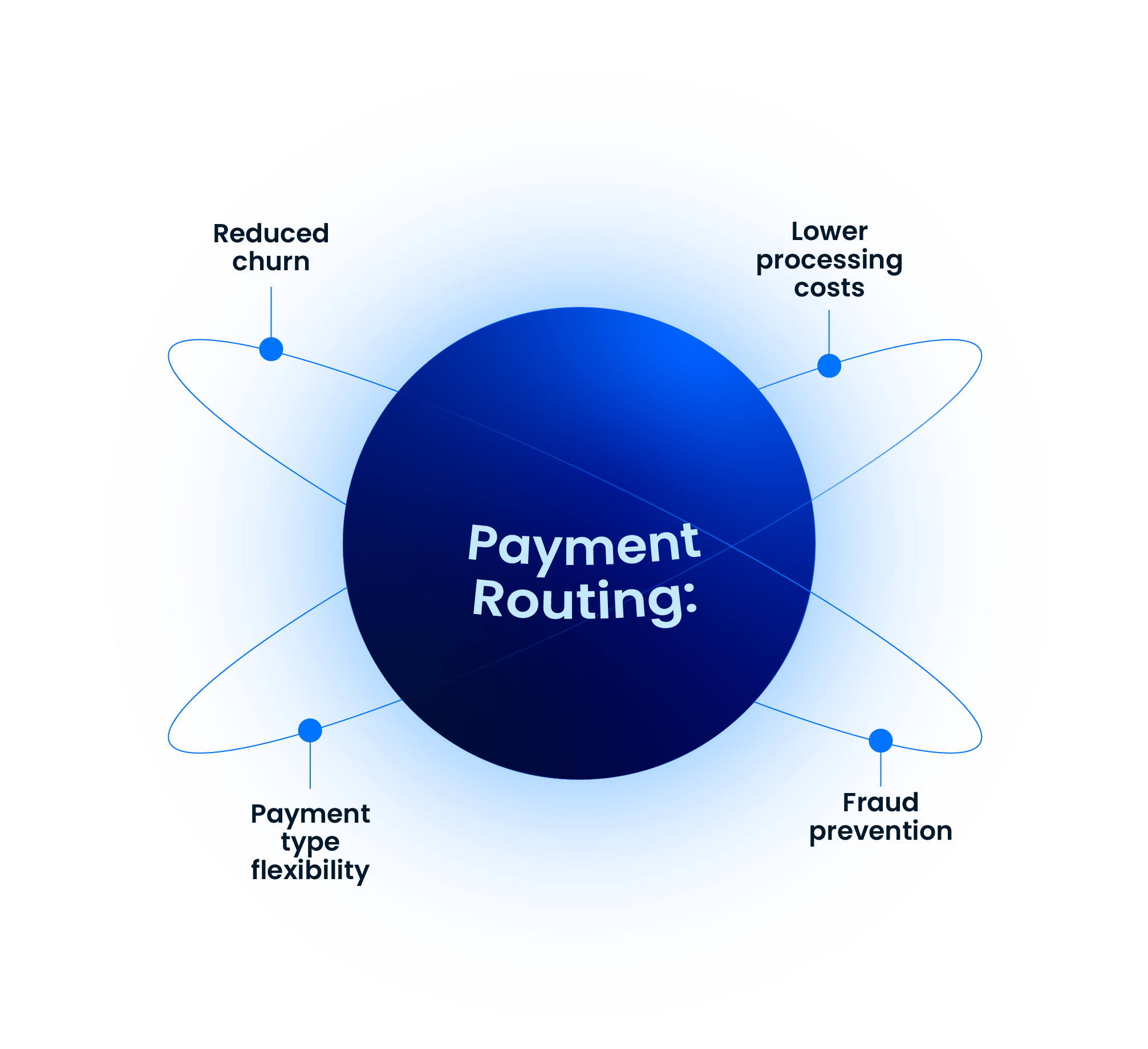 Benefits of Payment Routing
Every payment decision impacts revenue.
The processor, gateway, bank, and route a transaction takes can influence whether a payment is approved, how much it costs to process, how quickly it settles, and how smooth the customer experience feels. As ecommerce businesses scale across channels, regions, and payment methods, those variables become harder to manage manually.
That’s where payment routing creates an advantage.
Instead of sending every transaction along the same path, payment routing allows merchants to dynamically optimize transactions based on performance, cost, geography, risk, and customer behavior. The result is a payments strategy that improves approvals, reduces friction, lowers costs, and helps protect recurring revenue.
Below are some of the biggest benefits intelligent payment routing allows for ecommerce businesses.
Streamline the Payment Routing Process to Reduce Churn
Optimizing payment routing improves the customer experience by settling transactions more quickly and reducing the number of declined transactions. Smart payment routing reduces churn by identifying which paths are clogged with traffic or currently experiencing outages, routing around these slowdowns to banks that can process payments quickly. Simply having access to multiple banks will help you avoid the slowdowns or failures that can happen when one step in the payments process has an outage.
You are also more likely to turn soft failures into successes with payment routing. Rather than retrying the payment with the same bank (as most dunning processes would have you do), intelligent payment routing tries the payment with another bank that’s more likely to accept the transaction.
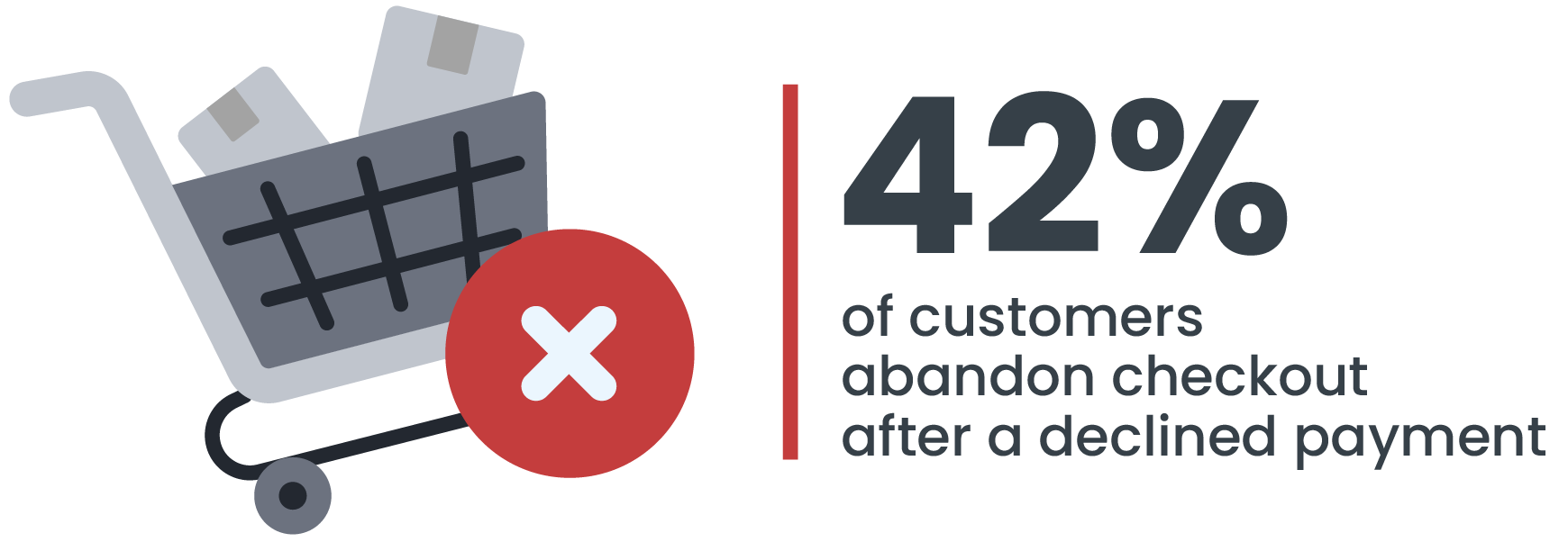
Card Not Present found that 42% of customers abandon their cart if their payment is declined. Ensuring customers’ transactions go through as expected can prevent this involuntary churn.
Reduce Payment Orchestration Costs With Smart Routing
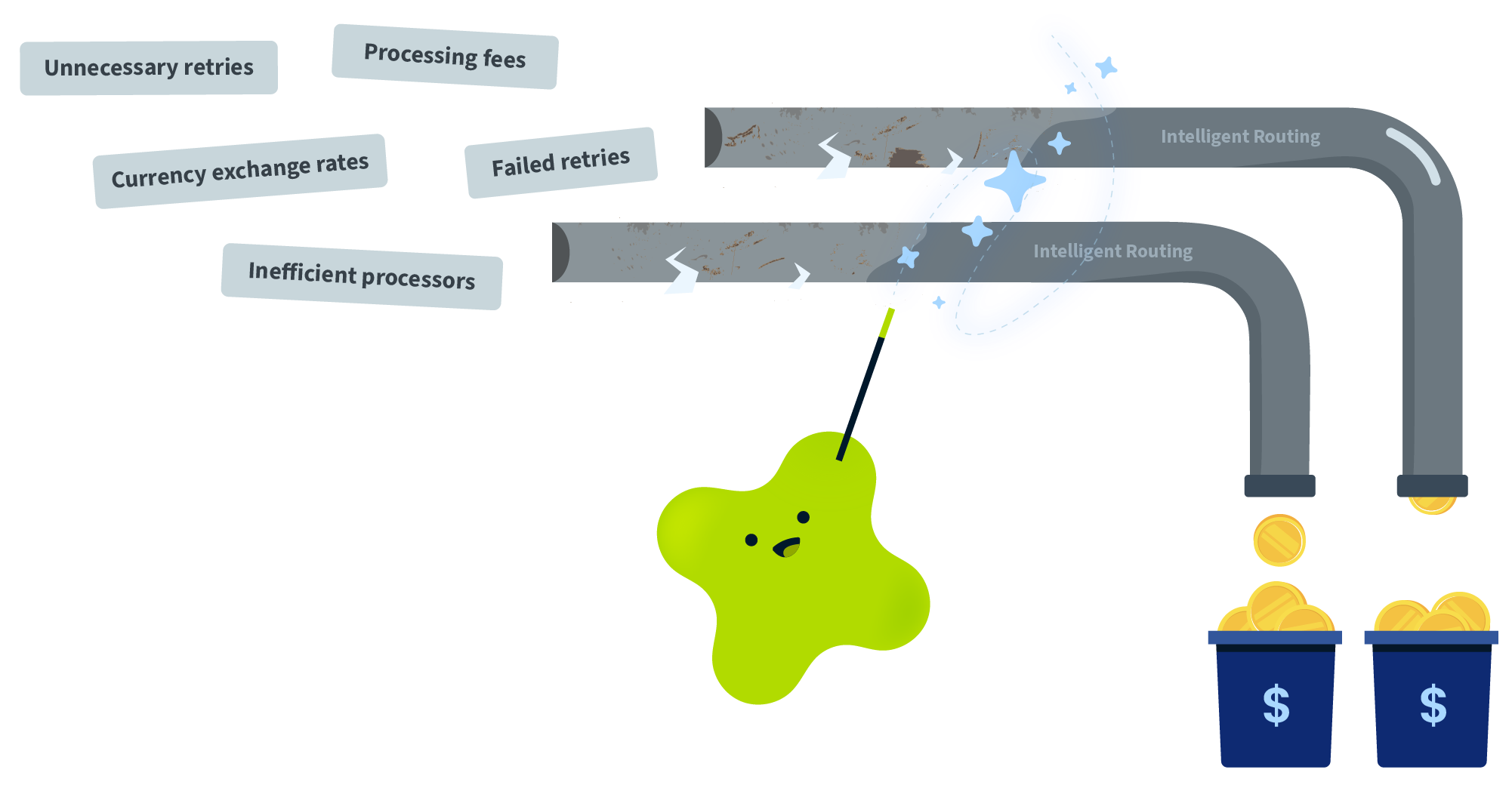
Intelligent payment routing also benefits merchants by automatically finding the path with the lowest transaction cost. Each transaction passes through multiple parties that charge fees. Intelligent payment routing can find the providers with the lowest processing fees for any given transaction.
Ecommerce businesses that sell cross-border stand to benefit even more from smart payment routing. Selling in multiple currencies means dealing with currency exchange rates and potentially losing money to them. You can avoid this problem altogether with a payment services provider (PSP) that accepts the customer’s local currency. You may also be able to process the purchase through a bank that’s in the same company as the buyer, eliminating cross-border payment fees.
Finally, you can save money on payment retries. Each time a transaction fails, your company is hit with fees. By increasing your payment success rate, intelligent payment routing strategies will save you from paying endless fees on transactions that don’t go through the first (or second, or third) time.
Increase Your Payments Security
Your payment services provider can help you increase security by enhancing anti-fraud practices on payments that meet certain criteria. It’s easy to add these steps to your payment flow when configuring intelligent routing rules.
One of the most important security measures you can add is tokenization. This feature protects customers by replacing their credit card information with an algorithmically generated code. Then, it transmits that code — the token — rather than a customer’s financial details. The actual credit card number is stored in a secure token vault. While your tokenization provider knows which token represents which card, a hacker who intercepts payment data can’t read or reverse engineer a customer’s payment details.
Payment platforms and gateway integrations can also help merchants layer in additional security measures like:
- Fraud protection. Send every transaction through a fraud detection tool (like Kount anti-fraud) to catch bad actors. A POP’s vast payment network may also catch purchaser behaviors that don’t match a consumer’s profile and likely signify fraud.
- SCA exemption management. Strong customer authentication (SCA) measures are required in Europe to decrease fraud, but they add another step to the checkout process, which can increase cart abandonment rates. You may be able to avoid this step if a customer has previously purchased from you and you can prove your business should be exempt.
- PCI compliance. Every ecommerce merchant needs to keep up with PCI standards. Since PCI is mandatory for payment providers, you won’t have to worry about that aspect of your security.
The PSPs that have connections to multiple payment gateways and acquiring banks also typically partner with multiple security tools, so you can choose the one that best meets your business’s needs.
Accept More Types of Payments
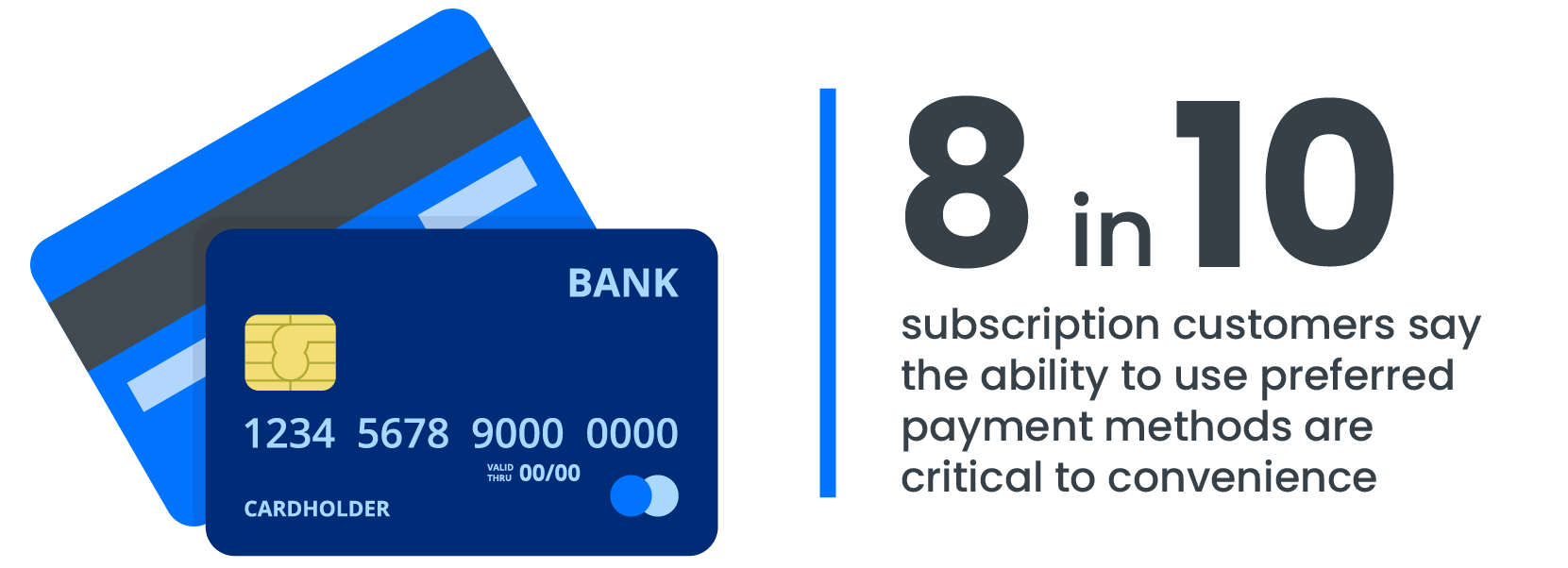
Working with multiple banks means you can accept more forms of payment, which will help you win (and retain) customers. In our May 2022 survey of subscription customers, over eight in 10 told us the ability to use their preferred payment method is a “core component” of convenience.
Sometimes, a company’s payment offerings can either collapse or broaden the gulf between customers and global sellers. 451 Research found that one in five US consumers has abandoned a purchase with an international merchant because they did not like the payment options. It stands to reason this sentiment is shared by consumers from other nations.
Even if you ignore the acquisition and churn statistics, it’s a simple fact that accepting more forms of payment will allow more people to buy from you. Millennials and Gen Z have relatively low rates of credit card adoption — 66% and 55%, respectively — compared to the 85% of baby boomers who pay with plastic. These consumers may be more likely to use a service like PayPal or a buy now, pay later (BNPL) solution. Having access to an international network of banks also allows you to accept multiple currencies. Some customers who opt for payment alternatives might still make the purchase if they had to pay in US dollars with a credit card, but a large chunk would not.
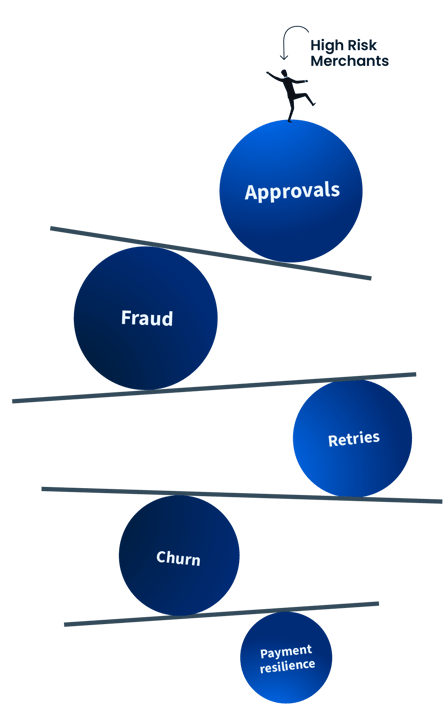 Why High-Risk and Subscription Brands Rely on Smart Payment Routing
Retention is a key metric for ecommerce subscriptions. Payment routing helps you prevent both voluntary and involuntary churn. It reduces the rate of failed transactions, a leading cause of involuntary churn (PYMNTS reports that 50% of subscription churn is due to avoidable payment failures). It also improves the customer experience by giving customers more payment options and processing their payments more quickly.
The additional layers of payment security are also crucial for high-risk merchants (a category that includes ecommerce subscription sellers) who operate in industries more prone to fraudulent payments.
As ecommerce businesses scale across processors, regions, and payment methods, payment routing becomes less of a nice-to-have and more of a competitive advantage.
Intelligent routing helps brands improve approvals, reduce friction, and protect recurring revenue — without adding operational complexity.
Ready to Improve Payment Performance?
See how smarter routing and payment optimization can help your business increase approvals and reduce payment friction.
Get started now!
*Updated June 15, 2026