
.svg)


.svg)

.svg)

.svg)



What Strategies Can a Company Use in an Economic Downturn?
Companies can navigate an economic downturn by protecting cash flow, improving operational efficiency, prioritizing customer retention strategies, optimizing supply chains, using technology strategically, recovering lost revenue, and planning for multiple economic scenarios.

Economic Pressure Changes the Growth Equation
A business can do everything right to win a customer. It can spend to reach the right audience, build an offer that resonates, create a smooth checkout experience, and earn the customer's trust. Then a recurring payment fails and that revenue disappears for a reason the customer never chose.
When growth is strong, losses like that can hide inside bigger numbers. When economic conditions tighten, they become much harder to ignore. Acquisition dollars face more scrutiny. Margins matter more. Cash flow gets a brighter spotlight. The question shifts from simply “How do we keep growing?” to “How do we protect the value we already created while preserving our ability to grow next?”
So, what strategies can a company use in an economic downturn? The strongest response is rarely one dramatic cut. Companies can protect cash flow and existing revenue, improve operational efficiency, strengthen supply chain optimization, use digital transformation selectively, prioritize customer retention strategies, increase customer lifetime value (CLTV), recover failed revenue, manage workforce capacity strategically, strengthen crisis management, and turn greater efficiency into a competitive advantage.
That does not mean every company should behave as though a recession has already arrived. In July 2026, the Federal Reserve described U.S. GDP growth as moderate in the first quarter while noting that consumer spending growth had slowed.
Its July Beige Book also described economic activity across most Federal Reserve Districts as increasing at a slight-to-moderate pace. The more useful takeaway for operators is not a label. It is that uncertainty and changing consumer behavior make preparedness valuable before conditions become more difficult.
An economic downturn puts every dollar under a brighter light. Cutting obvious expenses may be part of the response, but resilient businesses ask a more useful question too: Where is the revenue leaking?
What Is an Economic Downturn?
Economic downturn vs. recession
An economic downturn broadly describes a period when economic activity slows or declines. A recession is a more specific business-cycle designation. The National Bureau of Economic Research (NBER), which maintains the chronology of U.S. business cycles, defines a recession based on a significant decline in economic activity that is spread across the economy and lasts more than a few months.
That is why the familiar shorthand of “two consecutive quarters of negative GDP” is not a universal definition. The NBER considers depth, diffusion, and duration across multiple indicators. In unusual circumstances, an especially deep and widespread contraction can outweigh a shorter duration, as happened in 2020.
For business leaders, the distinction matters less than the operating reality. Slower or less predictable demand, tighter budgets, elevated costs, and more cautious consumers can all put pressure on cash flow, customer acquisition cost (CAC), margins, and retention before a formal recession is ever declared.
Why downturns change business priorities
During easier growth periods, businesses can sometimes compensate for inefficiency by adding more: more budget, more customers, more inventory, more tools, more people, or more campaigns. Under pressure, that approach gets expensive quickly.
Resilience comes from knowing what deserves protection, what can be improved, and what is genuinely waste. Research on companies that performed well through past downturns has repeatedly pointed toward preparation, productivity, balance-sheet discipline, and the ability to make selective decisions quickly rather than relying on blanket cuts.
When the cost of replacing revenue rises, keeping the revenue you already earned becomes more valuable. The following 10 strategies move from the most visible forms of protection to the less-visible revenue leaks that can quietly undermine an otherwise healthy business.
1. Protect Cash Flow and Existing Revenue
Cash flow tends to become more important as conditions tighten because it determines how much flexibility a business has when demand, costs, or financing conditions change. Start with the obvious audit: recurring expenses, underperforming initiatives, working-capital pressure, inventory commitments, and spending that no longer supports a clear business objective.
But separate cost from waste. A system that costs money and a system that wastes money are not the same thing. Technology that protects revenue, reduces manual work, improves conversion, or keeps customers active may deserve investment precisely because budgets are tighter.
Apply the same discipline to revenue. Look for failed transactions, involuntary churn, avoidable checkout loss, unnecessary chargebacks, and payment processes that create preventable friction. Expense reduction tells you where money is going out. A revenue-leakage audit tells you where money that should be coming in is disappearing.
That distinction changes the question from “What can we cut?” to “What value are we paying for, protecting, or accidentally losing?”
2. Improve Operational Efficiency
Operational efficiency is not simply doing the same work with fewer people. It is reducing the friction, duplication, and repeated intervention required to produce the same or better business outcome.
Audit the work behind the work. Where are teams manually moving information between systems? Which reports require repeated cleanup? Which processes depend on one person remembering the next step? Where are employees spending time on repetitive tasks instead of work that requires judgment, relationships, or specialized expertise?
Automation can help when it is attached to a specific process and outcome. The goal is to let technology handle repeatable tasks while people focus on the skills and decisions where human context matters most.
Payment recovery is a useful example. Manually chasing failed recurring payments or applying the same retry schedule to every decline can consume operational time without addressing why the payment failed. Automated payment recovery can reduce that burden while protecting recurring revenue at the same time.
3. Strengthen Supply Chain Optimization
For ecommerce businesses, supply chain optimization is both an efficiency question and a resilience question. Inventory ties up cash. Supplier delays affect customer experience. A single point of failure can turn an otherwise manageable disruption into a revenue problem.
Those disruptions carry a real financial cost. The 2025 J.S. Held Global Risk Report cites an estimated $184 billion in annual costs to organizations from global supply chain disruptions, based on Swiss Re data. That scale makes resilience more than an operations concern; it is a cash-flow and revenue-protection issue.
Review supplier concentration, inventory exposure, lead times, contingency options, fulfillment dependencies, and the operational impact of a disruption at each stage. Economic, environmental, political, ethical, and cybersecurity risks can all affect the ability to source, move, or fulfill products.
The goal is not necessarily the leanest possible supply chain. The cheapest supplier or lowest inventory level can become expensive if it leaves the business unable to fulfill demand. In a downturn, optimization means understanding the tradeoff between efficiency and resilience, then putting capital where it protects both.
4. Use Digital Transformation to Do More With Less
Digital transformation is useful downturn advice only when it is more specific than “adopt AI.” Technology should earn its place by improving visibility, automating repetitive work, accelerating decisions, consolidating systems, improving the customer experience, or directly reducing revenue leakage.
That can mean better revenue analytics, automated billing workflows, payment optimization, intelligent retry logic, or systems that give finance, ecommerce, and payments teams a shared view of performance.
Selective investment does not mean stopping investment altogether. The Federal Reserve's July 2026 Monetary Policy Report noted strong high-tech-related business investment even as some other areas of spending were softer. Businesses are still investing in technology, but the bar for that investment should be measurable value.
Before adding another platform, ask: What process does this improve? What manual work does it remove? What risk does it reduce? What revenue does it help protect or create? Digital transformation becomes resilience when those answers are clear.
Improving efficiency is partly about reducing what leaves the business. But the same scrutiny should apply to what never makes it in. Before assuming the next dollar has to come from a new customer, look at the revenue already moving through the business and ask where it is getting lost.
5. Prioritize Customer Retention Strategies
When acquisition gets more expensive, protecting the customers the business already worked hard to win becomes part of the efficiency equation.
Customer retention strategies become more important when acquisition spending faces greater scrutiny because the acquisition investment has already been made. The customer knows the brand, has demonstrated intent, and may already have an established purchasing or subscription relationship. Losing that relationship means losing current revenue and potentially paying again to replace it.
Replacing those customers can be expensive. Harvard Business Review has cited a rule of thumb that acquiring a new customer can cost five to 25 times more than retaining an existing one. Separate ecommerce research from SimplicityDX found that merchants were losing an average of $29 on each newly acquired customer, compared with $9 in 2013, as acquisition costs and returns increased.
Retention also correlates strongly with growth in recurring-revenue businesses. SaaS Capital's 2026 benchmarks found that companies with the highest net revenue retention (NRR) reported median growth 173% higher than the overall population median.
There is a familiar historical proof point here too: Bain research found that a 5% increase in customer retention could increase profits by 25% to 95% in the industries it studied. That figure is useful context, not a universal modern formula; the underlying economics vary substantially by business model, customer lifespan, margin, and retention cohort.
Practical retention levers include customer experience, responsive support, clear value communication, flexible subscription options, relevant offers, and removing friction from the moments that determine whether a customer stays.
For subscription and recurring-revenue businesses, retention also makes revenue more predictable. That predictability can be especially valuable when new demand is less certain.
Not all churn is a customer decision
There is another side of retention that is easier to miss: not every customer who disappears decided to leave.
Voluntary churn happens when a customer intentionally cancels or chooses not to continue.
Involuntary churn happens when the relationship ends because a transaction or billing process fails even though the customer may still want the product or service. Mastercard defines involuntary churn in recurring-revenue business models as losing a customer or subscriber due to technical issues, such as payment failures.
The distinction matters. A customer can be happy with the subscription and have no intention of cancelling, yet an expired card, insufficient funds, issuer restriction, authentication requirement, suspected fraud, or technical issue can interrupt the recurring payment.
From the customer's perspective, nothing about their intent changed. From the company's perspective, recurring revenue disappears unless the failure is addressed.
Where is the revenue leaking? Sometimes the answer is not a weak acquisition strategy or an unhappy customer. It is a preventable payment failure sitting between customer intent and collected revenue.
For subscription businesses, a deliberate payment recovery strategy can help prevent involuntary churn before a correctable payment failure becomes a lost customer.
6. Get More Value From the Customers You Already Acquired
Retention is the defensive side of the equation. Customer lifetime value is where that defense starts creating new offensive opportunities.
A customer who stays longer has more opportunities to renew, purchase again, upgrade, add complementary products, or move into an offer that better fits their needs. Relevant upsells and cross-sells, subscription flexibility, and stronger post-purchase experiences can help businesses create more value from acquisition dollars already spent.
Benchmarkit data reinforces the capital-efficiency case for expansion. Its 2025 SaaS benchmarks found that existing-customer expansion represented 40% of total new ARR at the median, and more than half of total new ARR among companies above $50 million in ARR. In the same dataset, companies spent a median $2.00 in sales and marketing to acquire $1.00 of new-customer ARR versus $1.00 to generate $1.00 of expansion ARR.
That does not mean squeezing more revenue out of every customer. The best expansion opportunities increase value for both sides: the customer gets a more relevant experience or offer, while the business increases CLTV without starting the acquisition process from zero.
Preventing an avoidable customer loss therefore protects more than one transaction. It can preserve the immediate payment, the remaining subscription relationship, and future expansion revenue.
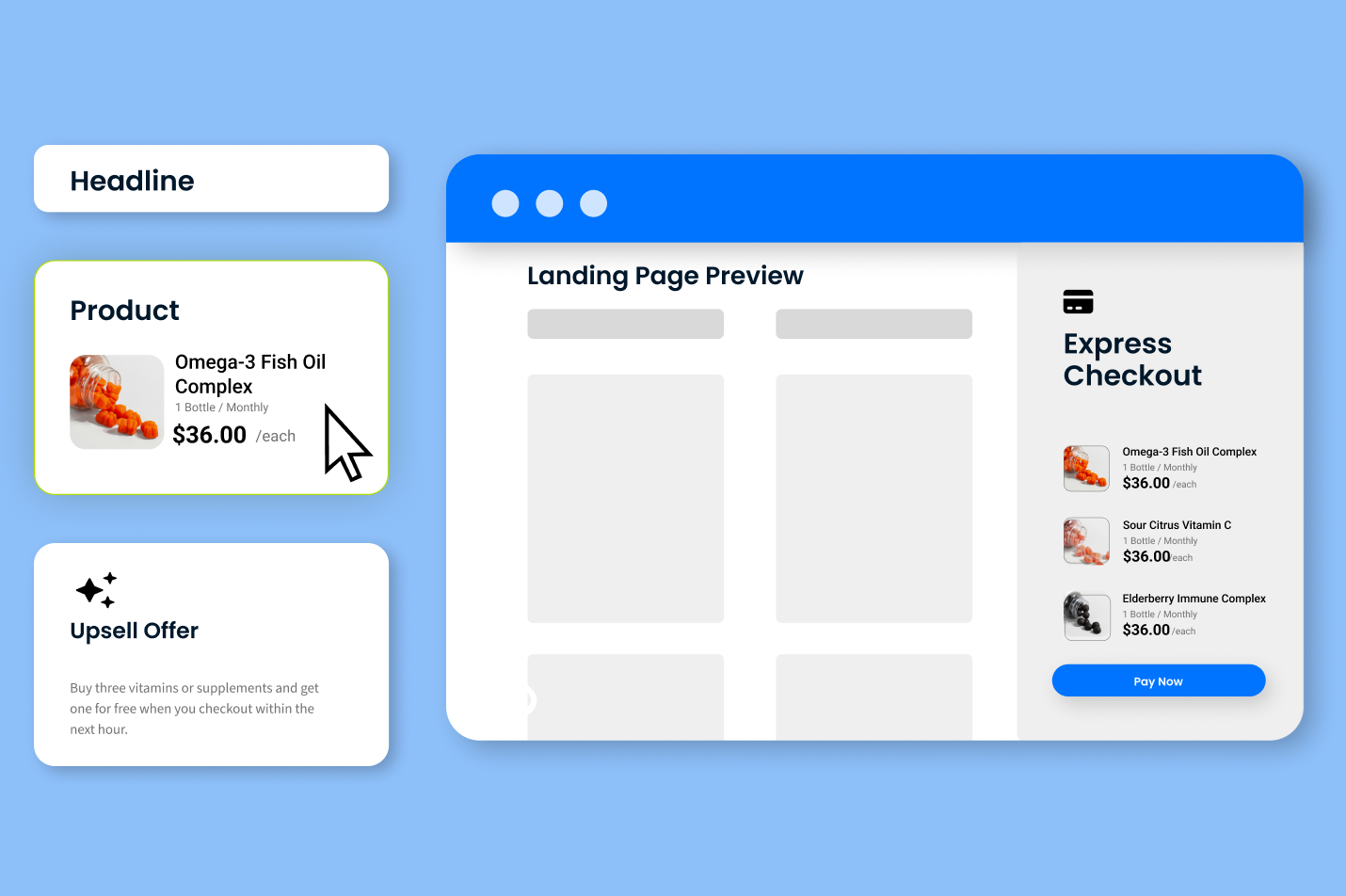
The right infrastructure can make those strategies easier to execute. Flexible subscription and offer management through Sticky CRM can help businesses adapt the customer relationship over time, while Sticky Checkout can help turn more existing demand into revenue through faster checkout experiences, relevant upsells, and order bumps.
7. Build a Revenue Recovery Strategy
Once a business starts looking for preventable revenue leakage, failed payments deserve their own strategy. Revenue recovery is the process of identifying recoverable payment failures and taking the right action to complete transactions that otherwise would have been lost.
The operative word is “right.” Recovery is not about retrying every failed transaction as often as possible. It is about understanding why payments fail, using better signals and payment paths where appropriate, keeping credentials current, setting guardrails, and measuring whether the program is actually producing profitable recovered revenue.
Understand why payments fail
Not all declines mean the same thing. A soft decline may be temporary or potentially recoverable, such as insufficient funds or certain authentication or processing conditions. A hard decline generally signals a more permanent problem that should not simply be retried.
According to Stripe, card payments can fail for a variety of reasons, including insufficient funds, incorrect or outdated card information, issuer restrictions, authentication requirements, suspected fraud, or technical issues. The decline reason should influence the response. Treating every failure identically wastes attempts and can create unnecessary customer friction.
Optimize retry timing instead of retrying blindly
The condition that caused a payment to fail can change. Funds may become available. An issuer's response may change. Credentials may update. That is why intelligent retry timing can be more effective than applying the same fixed schedule to every failed payment.
More retries are not automatically better. Card networks place limits on retry behavior, and repeated attempts can increase risk or create a poor experience. A recovery strategy needs both intelligence and restraint: retry when the transaction has a reasonable chance of succeeding, and know when to stop.
Keep payment credentials current
Recurring payments depend on credentials that can change even when the customer relationship does not. Cards expire, are replaced after fraud, are lost, or are reissued by the bank. If the billing system continues using stale credentials, a willing customer can look like churn.
Mastercard notes how quickly stored credentials can become stale: an estimated 33% to 40% of active cards are reissued annually because of routine expiration, fraud replacement, lost cards, or bank-portfolio migrations.
This can be avoided. The same research by Mastercard reports a 3.8x lift in transaction approvals for merchants using network-level credential updates compared with relying on stale card data.
The cost can extend beyond a single missed billing attempt.
Card account updater and token-refresh capabilities can reduce that avoidable failure by keeping stored payment information current behind the scenes. The smoother the update is, the less likely the business is to force a customer to interrupt their experience just to repair a payment method.
That customer experience matters because a payment problem can create an unnecessary decision point. PYMNTS found that more than one-quarter of subscribers who experienced declined payments allowed the subscription to end or switched services as a result. A recovery process that resolves correctable failures without unnecessary customer effort can help preserve continuity.
Use intelligent routing and cascading where appropriate
Sometimes recovery is also a payment-path problem. Intelligent routing can select an appropriate configured path for a transaction, while cascading can move a failed transaction to another configured path when the circumstances support it.
Neither technique overrides a legitimate issuer decision, and not every decline should be rerouted. Used appropriately, cascading payments and intelligent payment routing can create more flexibility in how transactions move through the payments infrastructure without turning recovery into indiscriminate retrying.
Use recovery guardrails
A sustainable recovery program protects merchant health as well as short-term revenue. Guardrails can include retry ceilings, stopping attempts after a successful recovery, appropriate treatment of hard declines, fraud and chargeback controls, and customer communication when intervention is actually needed.
This is especially important for businesses operating under tighter margins. Recovering revenue at any cost is not resilience. The objective is profitable, sustainable recovery that protects the customer relationship and the broader payments environment.
Measure recovery in dollars, not just attempts
A recovery dashboard should answer business questions, not simply count activity. Decline rate shows how much payment volume is failing. Approval rate shows how much is getting through. Recovery rate shows how effectively eligible failures are being recovered, while recovered revenue translates that performance into financial impact.
Uplift versus a baseline helps determine whether the recovery strategy is actually improving outcomes. Issuer and BIN performance can expose patterns in authorization behavior. Recurring-payment performance connects recovery to subscription health. CLTV, fraud, and chargeback impact help show whether recovered transactions are contributing to healthy long-term revenue.
For finance and payments leaders, the question is ultimately simple: How much revenue would we have lost without the recovery program, and what did it cost and risk to recover it?
Where Sticky Recovery fits
Sticky Recovery is built for businesses that want to make that process more intelligent and less manual. It combines intelligent retry logic, routing and cascading capabilities, credential support, recovery guardrails, analytics, fraud and chargeback protection, and streamlined workflows.
The business outcome is broader than a higher retry count. Recovery is one part of a larger revenue equation: getting more approved payments through, recovering the ones that can be saved, reducing involuntary churn, and protecting more recurring revenue and customer lifetime value along the way.
That makes payment recovery particularly relevant during periods of economic pressure. Before spending more to replace a customer who never meant to leave, make sure preventable payment failures are not quietly pushing them out.
Explore Sticky Recovery to see how intelligent recovery can help protect recurring revenue and reduce involuntary churn.
8. Approach Workforce Management Strategically
Workforce management during a downturn should start with capacity, not an assumption that fewer people is always the answer.
Identify which work requires specialized skills, institutional knowledge, customer relationships, or judgment. Then look for repetitive tasks that can be automated, simplified, deprioritized, or reassigned. Cross-training can reduce single points of failure, while clearer prioritization can keep teams focused on work tied most closely to revenue, customers, and operational continuity.
This approach preserves expertise the business may need when demand improves. Indiscriminate cuts can create short-term savings while making the eventual recovery slower and more expensive. Strategic workforce management protects the capabilities that are difficult to rebuild.
9. Strengthen Crisis Management and Scenario Planning
Downturn preparedness becomes more useful when it moves from a one-time plan to a repeatable operating rhythm. Crisis management is not about predicting one perfect future. It is about deciding in advance what the business will watch and how it will respond when conditions change.
Start with a small set of scenarios, such as downside, base, and upside cases. Then identify the metrics that would signal movement toward each scenario and the actions leadership would take. For ecommerce and subscription businesses, those indicators can include cash flow, conversion, CAC, CLTV, churn, recurring revenue, approval and decline rates, recovered revenue, chargebacks, and inventory exposure.
Shared visibility matters. Finance, payments, ecommerce, operations, and marketing should not be reacting to different versions of reality.
Three useful ways to structure scenario planning
-
McKinsey's “Plan-Ahead Team” model moves through five steps: assess the baseline, map scenarios, set a strategic posture, identify “no-regret” moves, and establish trigger points. The goal is to decide what conditions will change the plan before leadership has to make those decisions in the middle of a crisis.
-
Deloitte’s dynamic scenario approach uses major external uncertainties to create multiple plausible operating environments, then pressure-tests how the business would respond as conditions change. Instead of betting on one forecast, teams prepare for several materially different outcomes.
-
HBR’s “Vulnerability Prism” flips the question inward: instead of predicting the exact crisis, identify the internal failure that would hurt most. What happens if a customer database goes offline, a critical supplier fails, or a subscription billing process breaks? Preparing around vulnerabilities can make the business more resilient to multiple external shocks.
These frameworks differ in mechanics, but they share the same idea: resilience improves when teams know their weak points, watch agreed-upon indicators, and have already discussed what they will do next.
10. Turn Efficiency Into a Competitive Advantage
The goal of a downturn strategy is not to become the smallest possible version of the business. It is to become a more efficient, observable, and deliberate one.
A company that understands which channels are profitable, which customers are most valuable, where operational work is being wasted, where payments are failing, and which risks could interrupt growth has better information for every decision that follows.
That discipline can become a competitive advantage. Businesses that protect healthy revenue, reduce leakage, retain more customers, and preserve the capabilities needed for future growth may be better positioned to move when conditions improve.
The question is not only what can we cut? It is what can we protect, improve, and recover?
Protect the Revenue You Already Earned
Economic pressure changes the growth equation, but the answer is not simply to stop spending. Protect cash. Eliminate waste. Strengthen operational efficiency and supply chain resilience. Invest selectively in technology. Retain customers. Recover preventable losses. Preserve the people and capabilities that let the business move when opportunity returns.
And keep looking for the revenue that is easiest to overlook.
A willing customer lost to a failed recurring payment is a particularly clear example. The business already paid to acquire the customer. It already earned the relationship. The customer may still want the product. Allowing that revenue to disappear without a thoughtful recovery strategy means paying the cost of acquisition without capturing the value that acquisition was meant to create.
When every dollar matters more, protecting existing revenue becomes a growth strategy.
Ready to look for recoverable revenue?
Explore Sticky Recovery and assess where failed payments may be creating preventable loss.
Frequently Asked Questions
Answered
What is the difference between an economic downturn and a recession?
An economic downturn broadly describes a period of slowing or declining economic activity, while a recession is a more specific business-cycle designation. Rather than relying on a single indicator, the National Bureau of Economic Research considers the depth, diffusion, and duration of a decline when determining U.S. recessions.
How can a company improve cash flow during an economic downturn?
Improving cash flow starts with examining both sides of the equation: where money is being spent and where earned revenue may be leaking. Companies can reduce unnecessary expenses and working-capital pressure while also addressing failed transactions, avoidable churn, checkout friction, chargebacks, and other preventable losses.
Why is customer retention important during a downturn?
When acquiring new customers becomes more expensive or unpredictable, retaining existing customers helps businesses get more value from acquisition investments they have already made. Strong retention can also support more predictable recurring revenue and create opportunities to increase customer lifetime value through renewals, relevant offers, upsells, and cross-sells.
How do failed payments affect revenue during an economic downturn?
Failed payments can turn willing customers into involuntary churn, causing businesses to lose recurring revenue without actually losing customer intent. During a downturn, that preventable loss becomes especially costly because the business may then need to spend more to replace a customer it had already acquired.
What is a revenue recovery strategy?
A revenue recovery strategy identifies payment failures that may be recoverable and determines the appropriate action to help complete those transactions. Rather than simply retrying every decline, an effective strategy can use decline signals, intelligent retry timing, updated payment credentials, routing and cascading, and appropriate guardrails to recover revenue sustainably.
Recover More of the Revenue You’ve Already Earned
When every dollar matters, preventable payment failures shouldn’t quietly become lost revenue. See how Sticky Recovery helps you recover failed payments, reduce involuntary churn, and protect more recurring revenue with less manual effort.