
.svg)


.svg)

.svg)

.svg)


What History and the Data Tell Us About The Conflict in Iran's Impact on U.S. Ecommerce
How the War in Iran Could Reshape Ecommerce Costs and Strategy
The conflict in Iran is creating a compounding cost crisis for ecommerce businesses through simultaneous disruptions to shipping routes, energy prices, and supply chain reliability, on top of an already strained tariff environment.
Every major container carrier has suspended transits through the Strait of Hormuz — Maersk, Hapag-Lloyd, CMA CGM, and MSC among them — war-risk insurance premiums are spiking, and oil prices have surged more than 8% [1] in the first trading sessions since hostilities began.
For ecommerce merchants, this means tighter margins, longer delivery windows, and harder choices about how to absorb or pass through rising costs. The good news: businesses that act quickly on supply chain diversification, checkout optimization, and payment recovery can protect themselves. Here's what the data actually shows, and what you can do about it.
One-fifth of the world's energy flows through a 21-mile gap
The Strait of Hormuz, the narrow waterway between Iran and Oman, carries roughly 20 million barrels of oil per day, about 20% of global petroleum consumption and more than a quarter of all seaborne oil trade [2]. Approximately 20% of global liquefied natural gas (LNG) also transits the strait [3], the vast majority from Qatar. Beyond hydrocarbons, a significant share of the world's nitrogen fertilizer exports pass through the same corridor [4]. An average of roughly 107 cargo-carrying vessels transit the strait each day under normal conditions [5].
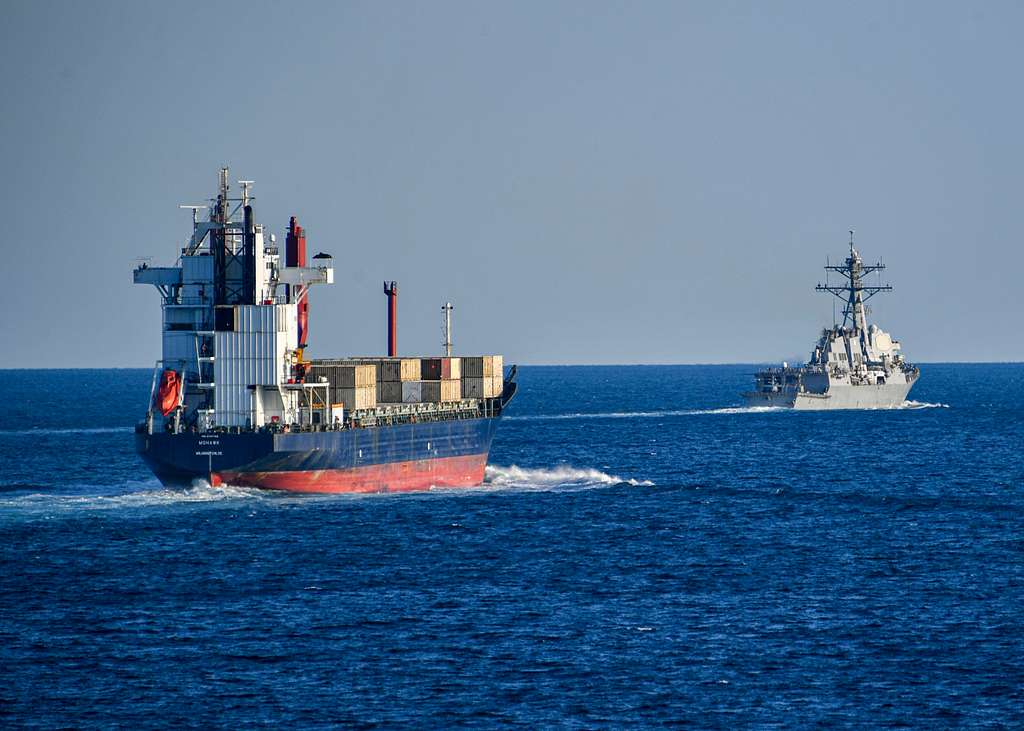
Following U.S. and Israeli strikes on Iran on February 28, 2026, tanker traffic through the Strait dropped approximately 70% within 48 hours [6]. Hundreds of oil and LNG tankers dropped anchor or remained stationary near the strait, according to shipping data compiled by Reuters [7]. All four of the world's largest container carriers, Maersk, MSC, Hapag-Lloyd, and CMA CGM, suspended Strait of Hormuz transits and paused plans to return services to the Red Sea, where Yemen's Houthi forces have signaled a resumption of attacks on commercial vessels. By Sunday, Lloyd's List data showed just 19 transits through the strait, down from 72 on Saturday and 116 the day before the strikes began, with only seven smaller tankers and one gas carrier passing through by 1800 UTC [5].
The strait hasn't been formally blockaded. But insurers have begun canceling war-risk coverage for Gulf transits, which creates a de facto closure for most commercial shipping. As Kpler's analysis noted, insurance withdrawal is effectively doing the work that a physical blockade has not, with the outcome for cargo flow being largely the same. The parallel to the Houthi Red Sea crisis of 2023–2025 is instructive but understates the stakes: the Red Sea carries roughly 12% of global container traffic, while the Strait of Hormuz handles 20% of the world's energy supply. There is no simple detour.
History suggests that complete, sustained closure is unlikely. During the Iran-Iraq War's Tanker War (1981–1988), 411 ships were attacked and 239 oil tankers hit, yet the campaign never disrupted more than 2% of ships passing through the Gulf at any given time [8][9], and Iran never followed through on threats to close the strait. In the 2019 Gulf of Oman tanker attacks, oil prices spiked roughly 4% before settling within days [10]. But the current situation involves direct military conflict, not isolated incidents, which changes the risk calculus for every carrier and insurer operating in the region.
Shipping costs are rising through three channels at once
The financial hit to ecommerce shipping costs arrives through three compounding vectors: rerouting expenses, war-risk insurance, and reduced fleet capacity. Each alone would raise costs; together, they create a multiplier effect.
Rerouting around the Cape of Good Hope, the only viable alternative, adds approximately 3,500 nautical miles, 10 to 14 additional sailing days, and 25–30% more fuel consumption per voyage [11]. During the Houthi Red Sea disruptions, when roughly 90% of east-west container ships diverted to the Cape route, J.P. Morgan estimated the rerouting equated to an approximately 9% reduction in effective global container shipping capacity [12]. Asia-to-Europe container rates tripled from December 2023 to February 2024 during that episode, eventually peaking at $8,400 per FEU (forty-foot equivalent unit) in July 2024.
War-risk insurance premiums represent a less visible but potent cost driver. Before the strikes, Hormuz transit premiums sat at relatively modest levels. Post-strike, Marsh's marine hull UK war leader estimated near-term rate increases for marine hull insurance in the Gulf could range from 25 to 50 percent, with a direct attack on merchant shipping potentially having major repercussions across war insurance rates [13]. During the Red Sea crisis, war-risk premiums spiked from a nominal 0.05% of hull value to as high as 1%, a roughly 20-fold increase [14]. For a vessel insured at $120 million, even a modest premium increase translates to hundreds of thousands of dollars in additional costs per trip.
Carriers are already passing these costs through. Hapag-Lloyd imposed a War Risk Surcharge effective March 2 of $1,500 per TEU ($3,500 for reefer and specialty containers) [15]. CMA CGM introduced an Emergency Conflict Surcharge ranging from $2,000 per 20-foot container to $4,000 for reefers and special equipment [16]. These surcharges land directly on importers and, ultimately, on ecommerce businesses and their customers.
Fleet capacity constraints compound the problem. The global container fleet stands at roughly 33.69 million TEU across 7,498 vessels, per Alphaliner data from January 2026 [17]. Fleet utilization was already tight, with commercially idle vessels representing just 0.3% of total capacity. A significant portion of the global tanker fleet also operates as part of Russia's sanctioned "shadow fleet," effectively removed from legitimate, insured global trade. When available tonnage shrinks while demand for longer routes increases, spot rates climb fast.
For context on how severe shipping cost spikes can get: container rates averaged $1,420 per FEU in 2019, surged to a peak of $10,377 per FEU during the COVID-era supply chain crisis in September 2021, a 631% increase, and had normalized to roughly $1,919 per FEU by late February 2026 [18]. The Red Sea disruptions alone pushed Asia-Europe rates up 80% in 2025 compared to 2023 [19], even after the initial crisis subsided. The current dual-chokepoint scenario, Hormuz and the Red Sea constrained simultaneously, has no modern precedent.
Oil prices drive costs through every link in the supply chain
Brent crude jumped roughly 8–9% in the first trading session after the strikes, rising from a Friday close of $72.48 to trade around $79 per barrel on Monday morning [20]. European natural gas futures surged more than 40% after QatarEnergy halted LNG production following military attacks on its operating facilities [21].
Where prices go from here depends on how long the disruption lasts. Goldman Sachs projects a $15 per barrel risk premium in a one-month full closure scenario, with sustained closure potentially driving prices well above $100 per barrel [22]. Analysts at JPMorgan and Barclays warn prices could spike to $100–$130 if the conflict results in prolonged supply disruption [16]. UBS analysts told clients it is possible the market is looking at a material disruption that sends Brent spot prices above $120 per barrel [13]. Citigroup's base case, a 1–2 week conflict, puts Brent in the $80–$90 range [23].
For ecommerce businesses, oil prices matter far beyond the cost of shipping containers across oceans. Bunker fuel accounts for a substantial share of vessel operating costs, and the cascade extends further.
Last-mile delivery depends on trucking, where fuel is the single largest variable cost. Air freight is even more exposed, with jet fuel representing 30–40% of total costs [24].
Warehouse and fulfillment operations consume energy for climate control, lighting, and automation. Fuel represents up to 50% of overall logistics operational expenses [25].
Manufacturing costs spike when energy prices rise. During the Russia-Ukraine oil shock in 2022, fertilizer expenses rose 90% and diesel costs rose 60% year-over-year, cascading into the cost of goods across categories [26].
Consumer spending power contracts. Americans spend more on fuel with less left for discretionary purchases. The Kansas City Fed found that gasoline and food account for 15–21% of total household expenditures, with lower-income households disproportionately affected because they spend a larger share of income on fuel [27].
The 2022 energy shock offers a direct case study. When oil prices surged following Russia's invasion of Ukraine, ecommerce sales growth dropped from 25.7% in 2020 to just 6.5% in 2022 [28]. McKinsey's ConsumerWise surveys show that by 2025, 75% of U.S. consumers were actively trading down, choosing cheaper brands, switching retailers, and delaying discretionary purchases [29]. The pattern is consistent across decades of data: the St. Louis Fed documented that nearly all post-WWII U.S. recessions were preceded by or accompanied by a sharp increase in energy prices [30].
Tariffs turn a cost increase into a cost multiplier
The shipping and energy disruptions arrive at a uniquely painful moment for U.S. ecommerce importers. The tariff landscape in early 2026, though in flux following the Supreme Court's February 20 ruling striking down IEEPA-based tariffs, still imposes significant costs on imported goods. Section 301 tariffs on Chinese products range from 7.5% to 25% depending on product category, with certain goods like semiconductors (50%), solar cells (50%), and electric vehicles (100%) facing even steeper rates [31]. Within hours of the ruling, the president imposed a new Section 122 tariff starting at 10% on all imports, quickly raised to 15%, the maximum allowed under that statute [32].
For ecommerce supply chains, the math is punishing. A consumer electronics product on Section 301 List 4A faces 7.5% plus the 15% Section 122 tariff, for an effective rate of roughly 22.5%. Electronic components on Lists 1–2 face approximately 40%. Apparel and footwear from China land at roughly 22.5%. These rates stack on top of already-inflated shipping costs and insurance surcharges.
The compounding works like this: if a $10 product that previously cost $1.50 to ship now costs $3.50 to ship (the additional $2 reflecting surcharges, rerouting, and fuel), and it also faces $2.25 in tariffs, the total landed cost rises from $11.50 to roughly $15.75, a 37% increase before the merchant adds their own margin. For a business operating on the typical ecommerce net margin of around 10% [33], that cost increase can erase profitability entirely unless prices are raised or efficiencies found elsewhere.
The elimination of the de minimis exemption makes this worse for cross-border sellers. The $800 duty-free threshold for Chinese goods was eliminated in May 2025, and the exemption was suspended for all countries effective August 2025 [34]. De minimis entries had grown from 153 million in 2015 to over 1 billion in 2023 [35], with 4 million packages per day processed under the exemption. Every shipment now requires full customs clearance, a customs bond, and proper valuation [36], adding compliance costs on top of tariff costs. A DTC Newsletter survey of more than 500 brands found that 49% report significantly increased landed product costs from tariffs, 71% are raising prices, and 41% have paused growth plans [37].
What this means for ecommerce margins, checkout, and customer lifetime value
Ecommerce businesses broadly operate on thin margins, roughly 45% gross and 10% net [38]. When shipping costs spike, energy prices rise, and tariffs compound, those margins can evaporate fast, and the pressure shows up everywhere from checkout conversion to customer retention.
Shipping represents roughly 12.7% of sales for the average retail business, and up to 16% for fashion and apparel [39]. Tariffs add 8–10% to ecommerce operational costs [40]. When these layer onto higher energy costs driving up fulfillment and last-mile delivery expenses, the cumulative hit can consume most or all of a merchant's net margin.
Cart abandonment data underscores how directly these costs hit revenue. The Baymard Institute's aggregate research puts the average cart abandonment rate at 70.19% [41], with 48% of U.S. adults citing excessive extra costs (shipping, taxes, fees) as their primary reason for abandoning [42]. When costs rise and merchants pass them through as higher shipping fees or product prices, conversion rates suffer at the most critical moment in the customer journey: checkout.
For subscription and recurring-revenue businesses, the pain is compounded. Fixed pricing commitments mean merchants can't easily adjust what existing customers pay without triggering churn. The subscription box market alone, valued at roughly $30–$33 billion in 2024 [43], averages 10–12% monthly churn, and research shows that price increases trigger a 15% immediate spike in cancellations [44]. In an environment where 75% of U.S. consumers are already trading down [29], raising prices is a high-risk move.
Cross-border ecommerce faces the sharpest headwinds. Bloomberg reported on March 2 that major ecommerce platforms are already warning of longer delivery times to the Middle East, with Temu extending estimated delivery windows from 15 to 20 days. For cross-border sellers, high logistics costs already impact 45% of transactions, and customs duties affect 38% [45]. The current disruption amplifies both problems.
How to protect margins, reduce churn, and maximize customer lifetime value
The ecommerce businesses that weathered COVID-era shipping chaos best shared common traits: they diversified early, invested in flexibility, and prioritized retention over acquisition when margins compressed. The same playbook applies now, with a sharper focus on the revenue levers you can actually control.
Optimize the checkout experience for a high-cost environment
When landed costs rise, every friction point at checkout costs you more. Customers who are already sensitive to higher prices will abandon faster if the buying experience isn't seamless.
Reduce unexpected cost shocks at checkout. The 48% cart abandonment rate tied to extra costs becomes even more damaging when those costs are legitimately higher. Transparent pricing earlier in the funnel, estimated shipping costs on product pages rather than at the final step, and tiered shipping options give customers a sense of control rather than sticker shock.
Streamline the payment flow. Checkout friction that might have been tolerable when margins were healthy becomes a direct revenue leak in a cost-compressed environment. Every additional step, every failed form field, every redirect reduces completion rates. UPS and FedEx have shifted to dynamic pricing models, and ecommerce businesses can use similar approaches to present real-time, accurate shipping costs without surprises.
Offer flexible payment and pricing structures. For subscription businesses, this might mean offering flexible tier structures: 61% of subscription services now offer at least three pricing tiers [44]. For one-time purchase merchants, buy-now-pay-later options or bundled shipping incentives can offset the psychological impact of higher prices.
Recover more failed payments to protect revenue you've already earned
When margins tighten, every dollar of recovered revenue matters more. Businesses with recurring billing lose an average of 10% of top-line revenue to involuntary churn annually [46], which represents failed payments that silently erode the customer base. Involuntary churn accounts for 20–40% of overall churn [47], and leading companies recover 85% or more of failed payments through sophisticated dunning and retry logic, compared to the roughly 70% industry average.
The difference between a 70% and 85% recovery rate can represent millions in preserved revenue. In a rising-cost environment where acquiring a new customer costs significantly more than retaining an existing one, payment recovery is the single highest-ROI lever most merchants are underutilizing.
Deploy retention strategies that increase customer lifetime value
Data shows that offering a pause option reduces cancellations by 18%, auto-ship discounts increase retention by 29%, and annual plans reduce churn by 51% compared to monthly billing. Community features around subscriptions reduce churn by 23% [44]. These aren't abstract suggestions: they're measured, proven approaches that become critical when external cost pressures push customers toward cancellation.
In inflationary periods, the merchants who win are those who shift focus from acquisition to lifetime value. It's cheaper to keep a customer than to replace one, and that math becomes even more lopsided when advertising costs rise alongside everything else.
Diversify your supply chain before you're forced to
A 2025 QIMA survey found that 33% of U.S. companies plan to nearshore [48], and 43% of companies with operations in China have already adjusted their sourcing strategies [49]. This doesn't mean abandoning Chinese suppliers overnight: two-thirds of companies plan to maintain or expand business with China, but it means not depending on a single source or a single shipping route. Vietnam's labor costs run roughly 40% of China's rate [50], and companies like HP have moved over 90% of North American products to non-China production.
Build inventory buffers and negotiate shipping contracts
The COVID era proved that just-in-time inventory models fail during supply chain disruptions. Companies that shifted to safety stock models and repositioned inventory closer to demand centers maintained service levels. AI-driven demand forecasting cut inventory costs by 15% for early adopters in 2024, according to McKinsey [51], and the technology is more accessible now.
Multi-carrier shipping contracts provide leverage and fallback options when one route or carrier faces disruption. And transparent customer communication about delivery timelines matters: during the Red Sea crisis, Maersk released preemptive ship diversion notices stretching months into the future. Ecommerce businesses should follow suit with honest delivery estimates rather than letting customers discover delays at checkout or after purchase.
Conclusion: The revenue you protect now is the revenue that compounds later
The convergence of Strait of Hormuz disruption, Red Sea uncertainty, elevated tariffs, and rising energy costs represents the most complex operating environment for ecommerce supply chains since 2021. But the data also shows this is not uncharted territory. The Houthi Red Sea disruptions of 2023–2025 demonstrated that shipping routes recover, and that businesses with strong checkout experiences, efficient payment recovery, and customer retention mechanisms emerge stronger.
The IMF's research quantifies the stakes: when global shipping costs double, headline inflation rises by about 0.7 percentage points, with the full effect taking roughly 12 months to transmit to consumer prices [52]. That timeline creates a window for action. The external cost pressures — shipping, energy, tariffs — are largely outside your control. But checkout conversion, payment recovery rates, churn reduction, and customer lifetime value are not. The businesses that focus on those internal levers now will be positioned to protect margins whether this crisis resolves in weeks or persists for months.
The businesses most at risk are those that do nothing and hope costs normalize on their own. In a world where two of the globe's most critical shipping chokepoints face simultaneous constraints, hope is not a strategy: operational resilience is.
Further reading: If you're looking to shore up the revenue levers within your control, these resources go deeper on the strategies mentioned above:
- Proven Strategies to Beat Checkout Abandonment — Nine ways to reduce checkout friction and improve conversion rates, especially when rising costs make every completed purchase count.
- Failed Payment Recovery: Reduce Churn Like a Pro — A practical breakdown of how involuntary churn works and the tools that address it.
- What Is Intelligent Payment Routing? — How smart routing across multiple gateways improves approval rates and reduces failed transactions.
References
- 5 Tankers shun Strait of Hormuz as total vessel traffic plunges — Lloyd's List
- 6 The Strait of Hormuz crisis explained — CNBC
- 7 Oil prices surge as tanker traffic halts near the Strait of Hormuz — Fortune / Reuters
- 8 Strait of Hormuz — Tanker War — The Strauss Center
- 9 The First Tanker War — History Today
- 10 Strait of Hormuz FAQ — The Strauss Center
- 11 Shipping giants reroute vessels around Cape of Good Hope — Marine Insight
- 12 Red Sea shipping disruption — J.P. Morgan
- 14 Red Sea transit insurance premiums and coverage exclusions — Policyholder Pulse
- 15 Hormuz Iran-US shipping war — The National
- 16 The first 36 hours: Strait of Hormuz becomes a war zone — gCaptain
- 17 2026 starts with container fleet utilisation strong — Global Maritime Hub / Alphaliner
- 18 Global container freight index, late February 2026 — Global Trade Magazine / Drewry
- 19 New normal for higher global container rates — FreightWaves / Drewry
- 52 How soaring shipping costs raise prices around the world — IMF
- 1 Oil prices jump after Iran supreme leader killed — Fox Business
- 2 Strait of Hormuz remains critical oil chokepoint — U.S. EIA
- 3 What would blocking the Strait of Hormuz mean for oil, LNG — Al Jazeera
- 4 Hormuz fertilizer and food crisis — Albis News
- 13 U.S.-Iran live updates — CNBC (Marsh estimates, UBS forecasts)
- 20 U.S. crude oil jumps more than 7% — CNBC
- 21 Higher gas prices likely coming after oil prices jump — NBC News
- 22 Strait of Hormuz crisis: Energy and business impact — Middle East Briefing
- 23 Analysts see $100 oil on Strait of Hormuz disruption — OilPrice.com
- 24 The impact of rising fuel costs in logistics — Atlas International
- 26 Turmoil in commodity markets following Russia's invasion of Ukraine — Kansas City Fed
- 27 Energy prices and household expenditures — Kansas City Fed, Economic Review
- 30 Rising oil prices and economic turmoil — St. Louis Fed
- 31 U.S. finalizes Section 301 tariff increases on imports from China — White & Case
- 32 Supreme Court Trump tariffs ruling analysis — Tax Foundation
- 34 De minimis exemption changes — Avalara
- 35 How many packages are sent under de minimis — Red Stag Fulfillment
- 36 Section 321 to formal entry for U.S. importers — ClearIt USA
- 37 How tariffs are impacting ecommerce brands — survey results — DTC Newsletter
- 28 Impact of inflation on e-commerce — Statista
- 29 The state of the U.S. consumer (ConsumerWise survey) — McKinsey
- 33 Product margin statistics — Opensend
- 38 10 profit margin benchmarks for ecommerce 2025 — Onramp Funds
- 39 Impact of shipping costs on your Shopify profit margin — Easyship
- 40 E-commerce market news — Market.us
- 41 Percentage of online shoppers who abandon their cart — Baymard Institute via Red Stag
- 42 Extra costs are the top reason consumers abandon online carts — eMarketer
- 43 Subscription Box Market Report 2025 — BusinessWire / ResearchAndMarkets
- 44 Subscription statistics — Marketing LTB
- 45 Cross-border e-commerce market — Business Research Insights
- 46 Involuntary churn guide — Butter Payments
- 47 Understanding involuntary churn — Monetizely
- 48 2025 Global Sourcing Survey — QIMA
- 49 Mitigating China supply chain issues — Optilogic
- 50 Moving manufacturing out of China — QCAdvisor
- 51 How tariffs are reshaping global supply chains in 2025 — SupplyChainBrain / McKinsey