
.svg)


.svg)

.svg)
.svg)



It’s the perfect time to launch your subscription ecommerce business. After months of high inflation that caused consumers to reevaluate their discretionary spending, the economy is rebounding. Brands that can offer new, exciting products are likely to benefit now that shoppers have more spending money again.
Assuming you already have a subscription product in mind, your next step toward a successful launch should be choosing a subscription ecommerce platform. With so many options and so many features, it’s a big decision that can make it hard for a newcomer to know what to look for.
Our expert team has spent years working with subscription ecommerce merchants, so we know which features matter. Subscriptions are all about building relationships, which means you’ll need tools that support an outstanding customer experience. Plus, you’ll want a platform that simplifies the work of selling so you can spend more time making your buyers happy.
The 8 Subscription Management Features Sellers Need
Successful subscription offerings marry customer convenience with high levels of personalization. They must be easy for sellers to maintain and fulfill so scaling doesn’t take a disproportionate amount of resources. Here are the eight features subscription merchants need to make that goal a reality.
1. Flexible Recurring Billing Options
Maximize your revenue by tailoring your billing options to consumers’ wants. Subscription apps with strict billing logic lock your customers into a small range of preset billing cycles or your products into one subscription model. Each restriction further shrinks your target audience.
A platform with advanced billing logic capabilities will free you (and your customers) from such constraints. Look for a subscription management app that allows you to:
- Bill by cycle (e.g., subscribers are billed every 30, 60 or 90 days)
- Bill by date (e.g., customers are billed on the first of each month)
- Bill by day (e.g., buyers are billed on the second Thursday of every month)
- Bill by relative date (e.g., consumers are billed periodically but always on the same day of the month they signed up)
- Bill by schedule (e.g., you set specific billing dates over any interval to apply to all customers)
Even if you don’t have the resources to offer every type of subscription right now, you’ll want to expand your options as you grow. Look for a platform that’s continually developing new billing logic options, as tomorrow’s customers may prefer a subscription plan that doesn’t exist today.
2. Subscription Self-Management
Reduce your churn rates by allowing customers to tailor their subscriptions to meet their needs. Imagine this: A buyer who likes (but doesn’t love) your company has an excess of product after six months of subscribing. This isn’t an uncommon occurrence; in fact, it’s to blame for almost one in five subscription cancellations.
Faced with this situation, a customer’s first thought will probably be to unsubscribe. A good subscription self-management portal can prompt them to modify their subscription size or cadence instead, preventing churn.
The more options you offer your customer base — and the easier it is for them to modify their subscription — the higher subscriber satisfaction will be. Your subscription ecommerce platform should have the ability to:
- Pause, skip, cancel or advance shipments
- Add, swap or remove products from orders
- Update payment and shipping information
- Change next billing date
Seventy-eight percent of consumers want the ability to manage their own subscriptions. Companies that don’t offer this capability may not notice the cost until they’ve lost buyers — at which point it’s already too late.
3. Membership or Loyalty Perks
Customers love deals, especially when the economy gets tight. Keep your customers around and make them feel special with perks tied to membership or loyalty programs. And don’t doubt that they’re a worthy investment — a survey of over 2,000 subscription holders found that almost 30% would cancel a subscription over discontinued perks such as loyalty benefits.
Administering a loyalty program or otherwise rewarding top subscribers isn’t simple. You’ll want an app that makes it easy to set up common discount schemes.
One of the simplest loyalty discounts is a subscribe-and-save setup. You can add dynamic discounting to sweeten the deal and steer subscribers toward certain subscription plans.
Advanced membership programs allow you to give big spenders a VIP experience. Perks may include exclusive access to certain products, one-of-a-kind coupons or freebies like gifts or free shipping.
Sellers on BigCommerce can use Customer Groups to sort subscribers into members and non-members and then award the appropriate perks to the members group. Or, you can use this feature to personalize deals. Segment customers by subscription product or billing frequency and give discounts that are tailored to each group.
BigCommerce merchants, therefore, need a subscription management app that plays well with Customer Groups. Sellers who are undecided on a platform will want to look for a similar toolset.
4. Buyer Data and Analytics
Making the most of any subscription program means using your customer data to learn and grow. Ecommerce sellers have access to a wealth of information about how their buyers interact with their brand. Subscription merchants should track:
- Subscription statistics like subscriber numbers, subscriber growth and subscription retention rate
- Popular ecommerce KPIs, including customer lifetime value (CLTV), average revenue per customer (ARPC), monthly recurring revenue (MRR), annual recurring revenue (ARR) and customer acquisition cost (CAC)
- Metrics that help you understand your MRR, like revenue churn and gross and net revenue retention
- Involuntary churn rates and related information, such as credit card decline rates and reasons and your chargeback ratio
- Sales and product information, including sales numbers, return rates and product forecasts
- Cohort analyses that help you dig into specific customer segments to see what your most loyal customers have in common and what they value most about your subscription offering
It takes time to gather the volume of data you’ll need to draw meaningful conclusions about what makes customers spend more and what makes them unsubscribe. If you’re even thinking about becoming a data-driven operation in the future, you’ll want to get started now.
5. Decline Management Tools
There’s no such thing as a churn rate that’s “too low.” Each retained customer is more money in your pocket. However, you’ll need multiple tools to address the many reasons for churn. Look for a decline management suite that helps you understand why customers are leaving and keep them around.
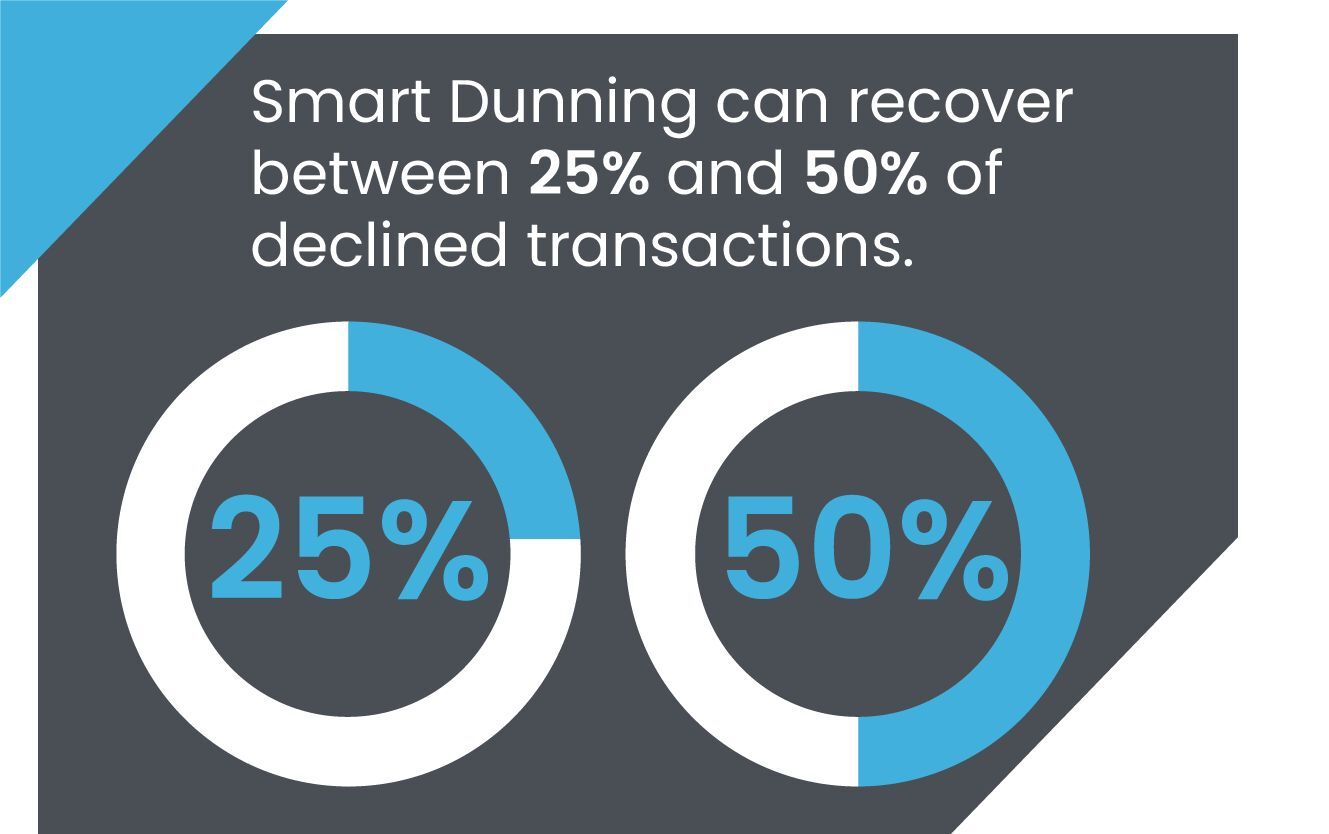
It’s important to address both voluntary and involuntary churn: Up to half of your losses may be due to the latter if you don’t take any steps to combat it. Invest in tools that turn payment declines into successes to increase your retention rate.
Rebill Protection flags orders that are missing necessary information so you can fix the account before the transaction is declined. Your platform should also automate dunning emails and transaction retries. Together, these tools target the biggest drivers of involuntary churn.
6. Multi-Storefront and Multi-Currency Options
The larger your potential audience, the more your subscription business can grow. Serve customers no matter where they are and what they’re buying with a subscription app that allows you to administer multiple storefronts and accept multiple currencies.
Multi-storefront capabilities are important for big brands, but it’s something any merchant looking to expand should consider. After all, this feature makes it easy to grow in multiple directions. Perhaps your artisanal, organic cat food subscription does so well that you decide to branch out into dog food. Rather than trying to build a site that caters to both cat lovers and dog parents, you can create separate, targeted storefronts for each audience. Or, if you want to expand your cat food subscription into Canada, you can build a new storefront that lists product volume in kilograms instead of pounds.
Those Canadians will also thank you for your store’s multi-currency support, which will allow them to pay in CAD or USD. Even sellers who don’t court specific international audiences can benefit from this feature. For example, a craftsperson who accepts USD, GBP and EUR can sell to international tastemakers along with those at home.
Multi-storefront and multi-currency options aren’t universally available. Don’t hamstring your future growth with a subscription commerce app that doesn’t support these features.
7. Integrations
No subscription management platform can do everything you need to keep your business running smoothly. You’ll likely be relying on a number of other tools to provide services, including payment processing, customer service and logistics support. Choose a platform that integrates with multiple tools so you can shop around to find the best one for your needs.
Here are some of the main categories of integrations you’ll likely need to set up, along with excellent choices for BigCommerce merchants.
Accounting and Tax
- Avalara
- TaxJar
- Vertex
B2B and Wholesale
- B2B Ninja
- BundleB2B
Payment Gateways
- Adyen V2
- Authorize.net
- Barclaycard Fuse and Barclaycard Smartpay Advance
- Braintree
- Chase Merchant Services
- PayPal
- Stripe and Stripe V3
Shipping and Fulfillment
- Advanced Shipping Manager
- ShipperHQ
- ShipStation
Marketing and Merchandising
- Affiliatly
- Klaviyo
- Mailchimp
- Omnisend
- Shogun Page Builder
- Smile.io
- Yotpo Loyalty and Referrals
If it comes down to choosing between a beloved app integration and one of the features called out in this post, prioritize the foundation over the plugin. It’s not worth sacrificing a platform must-have just so you can use an app that’s a smidge better than the competition.
8. Expert, Available Customer Support
Unless you’re a developer, you need someone on your side when unexpected issues arise. Outages or recurring errors drive away would-be subscribers, and payment issues can decimate your subscriber base if they’re not solved promptly.
You should look for three things from a subscription ecommerce platform’s support promises:
- Availability during your team’s business hours
- Live support via phone or chat for urgent issues
- No extra charges for access to customer support
You may also want to look at a platform’s reviews on a third-party site like the BigCommerce App Marketplace, Capterra or G2. Merchants who struggled to get adequate support will often share their experiences, and multiple one- or two-star ratings could be a red flag.
On the flip side, try to find green flags when talking to sales reps. Does a service offer white-glove onboarding or migration support? Will you be assigned an account representative to answer all your questions, or get whoever answers the helpline each time you call? The more personalized and available a support team is, the better for your store.
A Subscription Is Only as Strong as Its Foundation
Even the best subscription business plan requires solid technical backing to succeed. Unless you’re also a web developer, you’ll need to partner with a subscription ecommerce platform to support your vision. And the app you choose can be a deciding factor on whether your subscription takes off or flounders.
Now that you’re more informed on what to look for, it’s time to dig deep into each platform you’re considering. Ask yourself: Does this tool have the features I need now and give me room to grow? Am I in the target market it’s looking to serve, or will my needs be ignored as the developers build features that appeal to a different seller?
We know how difficult it can be to compare products with hundreds of features — but when you use this post as a framework, you’ll start to get an idea of who the top contenders are and be well-prepared to make an informed choice that’s best for your business